
Readiness in Focus: Insights from the London Defence Conference 2026

Last week, I attended the London Defence Conference (LDC) where I had the opportunity to participate in various sessions and present my research poster. Drawing on my experience at the conference, this piece presents my key observations and reflections.
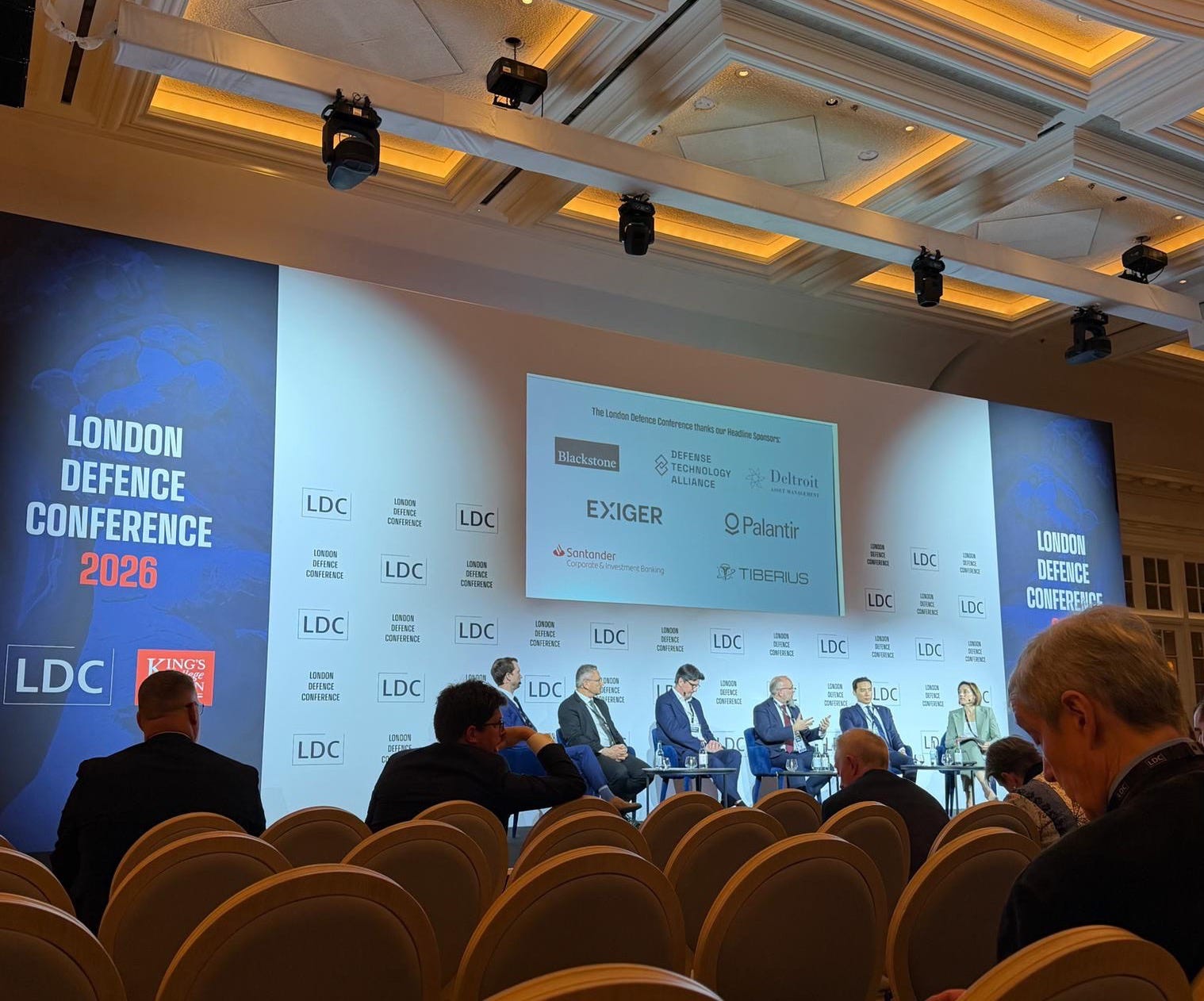
The conference has emerged as one of the most prominent security forums in the wake of the Ukraine War, first convened in 2023. Bringing together policymakers, military officials, industry leaders, academics, and media representatives, the conference provides a multidimensional platform to debate the rapidly evolving global security environment.
Each year the LDC has focused on distinct themes, with 2023’s “Stronger Security in a Fast-Changing World,” 2024’s “Deterrence: Building Capacity to Counter Global Threats,” and 2025’s “Alliances” reflecting shifts in international security. This year the conference held between April 9-11, centered on the theme of “Readiness.” This year’s theme evokes a stronger sense of action than the previous ones. Rather than merely diagnosing threats or discussing frameworks, “Readiness” calls for proactive preparation, rapid adaptation, and the ability to respond effectively to a wide spectrum of security scenarios.
The opening panel “Uniformed Services and the Whole-of-Society Approach” set the tone by highlighting the necessity of integrating civilian and military efforts in national defence strategies. This approach recognizes that modern conflicts include traditional battlefields but also extend beyond them, encompassing economic resilience, technological innovation, and societal cohesion. In this sense, one of the key concepts discussed extensively during the conference was resilience. Unlike traditional notions of strength, resilience is a core component of readiness and relates to the ability to learn, adapt, and sustain functionality under pressure.
Following the invasion of Ukraine, several European countries have invested in enhancing resilience in civilian domains. Some have prepared public guidance materials outlining actions to take in times of crisis or war, while others have explored ways to protect cultural heritage during conflicts. Discussions at the conference reflected a growing interest in strengthening the whole-of-society approach in the UK. The challenge lies in framing the narrative of readiness in a way that mobilizes society by fostering a sense of urgency without inducing fear.
Additionally, the concept of reindustrialization emerged as a central subtheme of the conference, not merely as an increase in production capacity but as a qualitative shift toward smarter, faster, cheaper and more collaborative manufacturing processes. During the sessions, it was emphasized that the nature of warfare is undergoing rapid transformation, driven by technological advancements and shifting geopolitical dynamics. National security now encompasses a wide array of domains, from supply chains and energy systems to information environments and emerging technologies. Defence industries are no longer evaluated solely on output volume but on their ability to innovate, integrate, and scale efficiently in response to emerging threats. In this sense, readiness is not a static condition but a dynamic process shaped by continuous learning and adaptation.
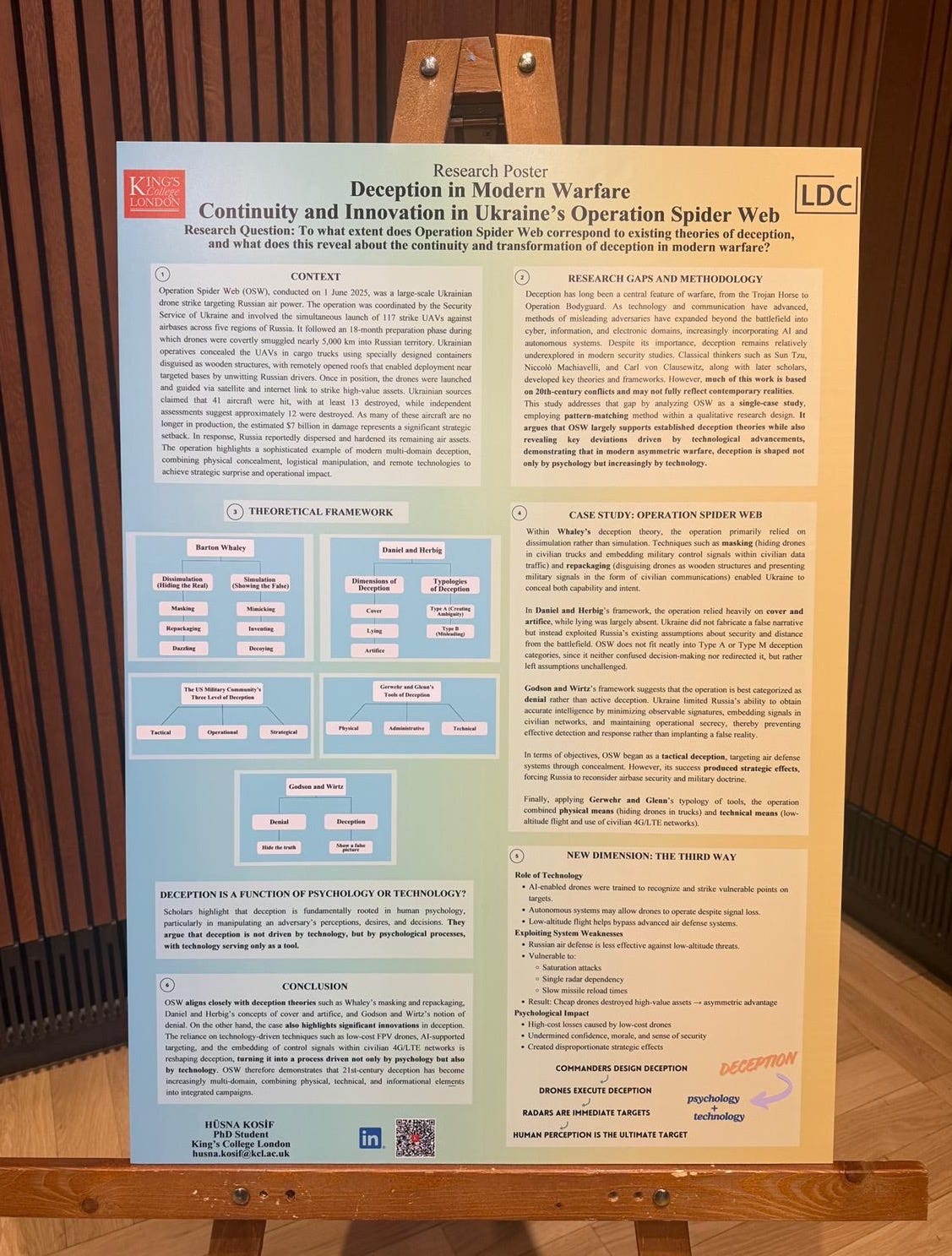
The conference also addressed the evolving character of warfare, with particular attention to lessons learned from Ukraine. The conflict has demonstrated the continued relevance of conventional warfare while simultaneously highlighting the transformative impact of new technologies. The widespread use of drones has fundamentally altered the battlefield, enabling more flexible and cost-effective operations. One of the most important examples of Ukraine’s advanced capabilities in this regard is Operation Spider Web, a drone attack targeting Russian aircraft which was the subject of my research poster presented at the conference. In this study, I analyzed the extent to which it corresponds to existing theories of deception and what it reveals about the continuity and transformation of deception in modern warfare. Operation Spider Web is one of the most significant examples showing how weaker states can gain asymmetrical advantages over stronger adversaries through deception and surprise attacks. Ukraine’s experience further demonstrates how necessity can drive rapid innovation, offering valuable insights for other countries seeking to enhance their defensive capabilities.
The concept of alliances remained central to the conference’s discourse. For the UK, while NATO continues to be the primary framework for collective defence, strengthening bilateral and regional partnerships within Europe and through the “special relationship” between the UK and the US is essential. The idea that “united we are stronger” encapsulated the prevailing sentiment, especially in the face of a perceived alignment among adversarial states such as China, Russia, Iran, and North Korea. Despite their ideological differences, these countries were described as converging around a shared objective of challenging the Western-led international order. A recurring concern was the perceived uncertainty surrounding the US’ commitment to European security and its role within NATO.
Ultimately, the LDC underscored a fundamental shift in how security is conceptualized and practiced. Readiness is not a static goal but an ongoing process that demands continuous adaptation, collaboration, and investment. It requires a holistic approach that integrates military, economic, technological, and societal dimensions, while also addressing the psychological aspects of preparedness.
Looking ahead, the continuation of initiatives such as the Future Leaders’ Day and the upcoming the LDC Washington Forum in September 2026 indicates that the conference aims to sustain its momentum and expand its influence. As global security challenges become increasingly complex and interconnected, platforms like the LDC will play a crucial role in shaping Western strategic thinking and fostering the collaborative efforts needed to navigate an uncertain future.